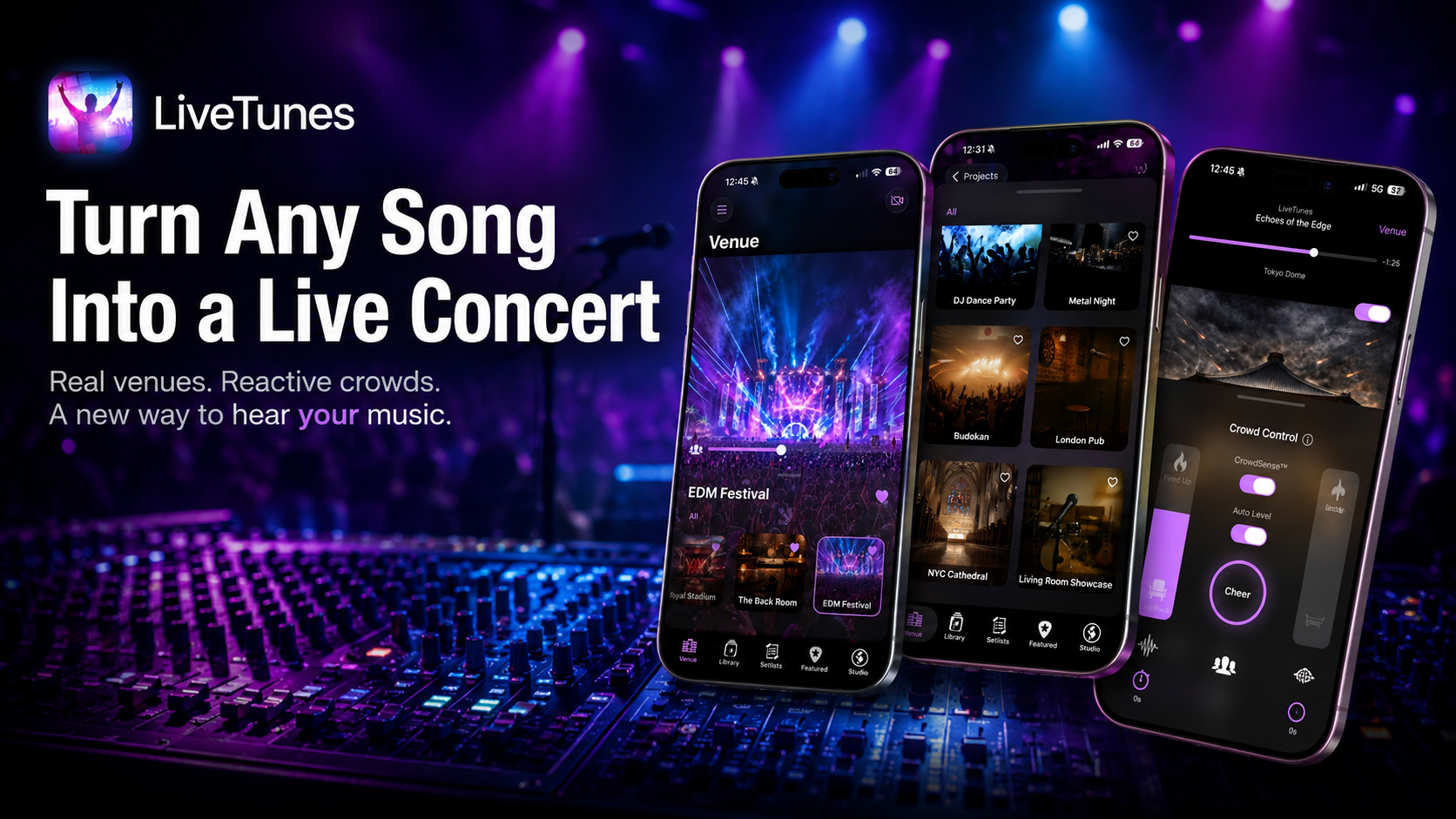
After a long hiatus, LiveTunes — the iOS music app that once held the No. 1 spot in Japan's Music category for nearly three years — has returned today with a complete ground-up rebuild. Created by independent developer, musician, and audio engineer Mark Hill, LiveTunes 4.0 transforms any song into a live concert experience, using convolution reverb captured from real venues, reactive crowd FX, and a new creator-focused studio for building and exporting live-album-style performances. The relaunch adds full support for imported audio, including AI-generated music from tools like Suno and Udio — positioning the app at the intersection of live music nostalgia and the booming AI music creation movement.
01 — The Story An indie app that became a phenomenon in Japan
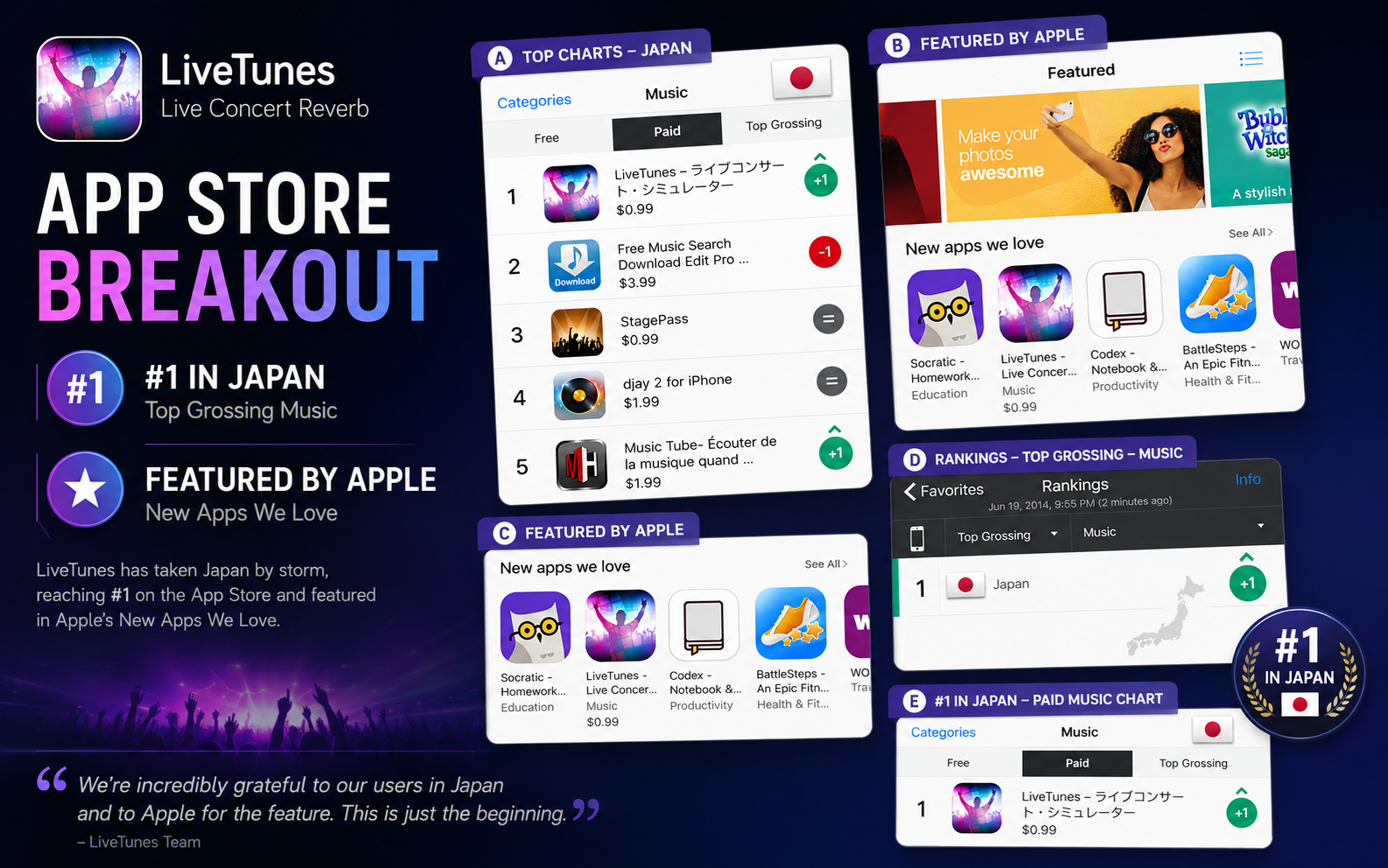
Originally launched in 2013, LiveTunes found an unexpected and devoted audience in Japan, where it climbed to No. 1 in the App Store's Music category and held that position for nearly three years — an extraordinary run for an indie app from a solo developer. Apple later featured the app in multiple promotional placements. USA Today praised it as something that "breathes new life into your music." Coverage in industry publications including MixOnline and recognition from the AppleVis accessibility community followed.
Then, after years of active development, Hill — a working musician and audio engineer — stepped away from the app to focus on other projects. But the audience never fully went away. Existing users continued to send messages, post reviews, and ask for updates. The Japanese community in particular kept the app's flame alive.
A song generated by AI at 2 a.m. deserves to sound like a real show in a real venue. That's what LiveTunes does now. Mark Hill, Founder & Creator
02 — The Rebuild What LiveTunes 4.0 is, and what's new
LiveTunes 4.0 is a complete iOS-native rebuild. The app now offers 30+ remastered venues — from intimate clubs to symphony halls, dive bars to stadiums — each using convolution reverb modeled on real acoustic spaces rather than the algorithmic reverb common to most music apps. A new feature called CrowdSense™ analyzes music in real time and triggers crowd reactions at moments worth cheering for. Crowd Control lets users manually trigger applause, cheers, and audience energy live as the music plays.
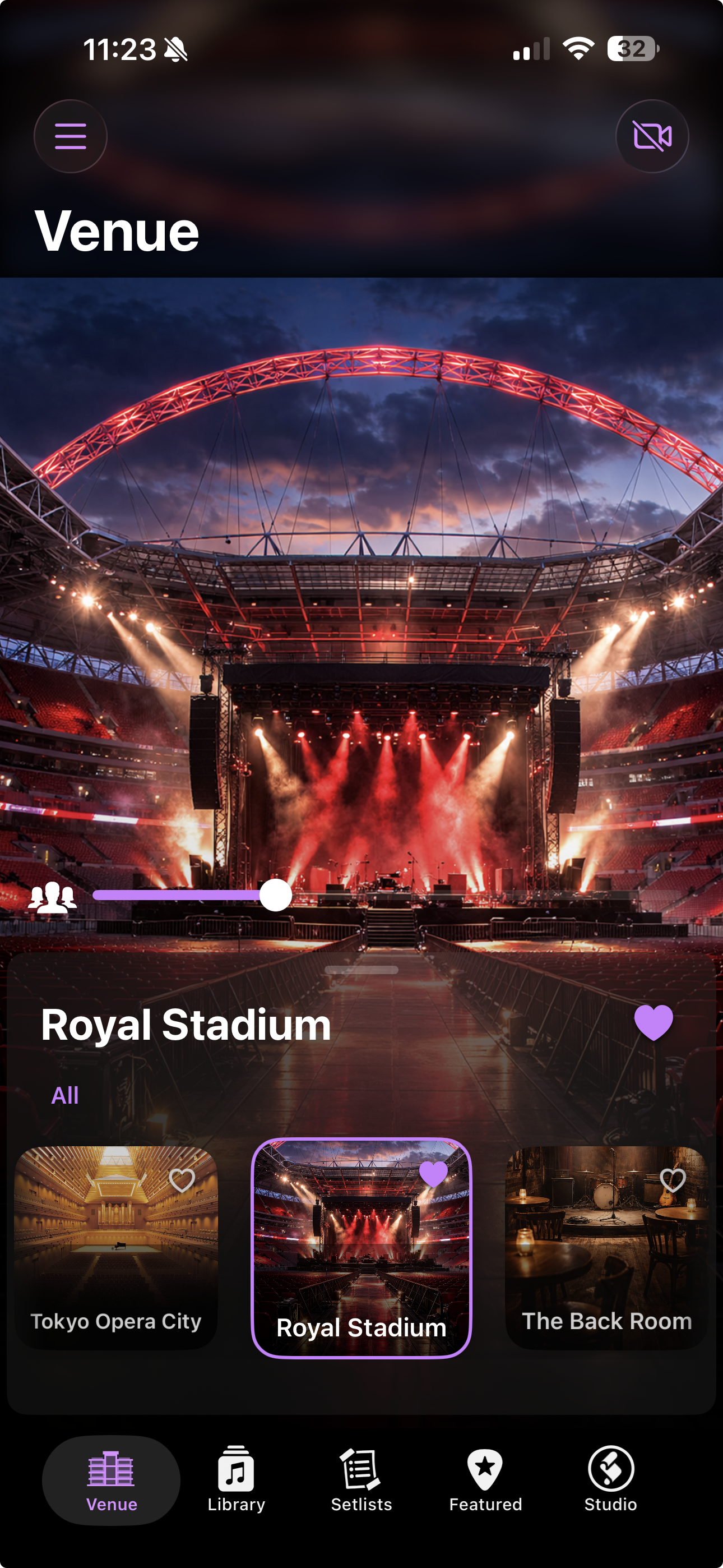
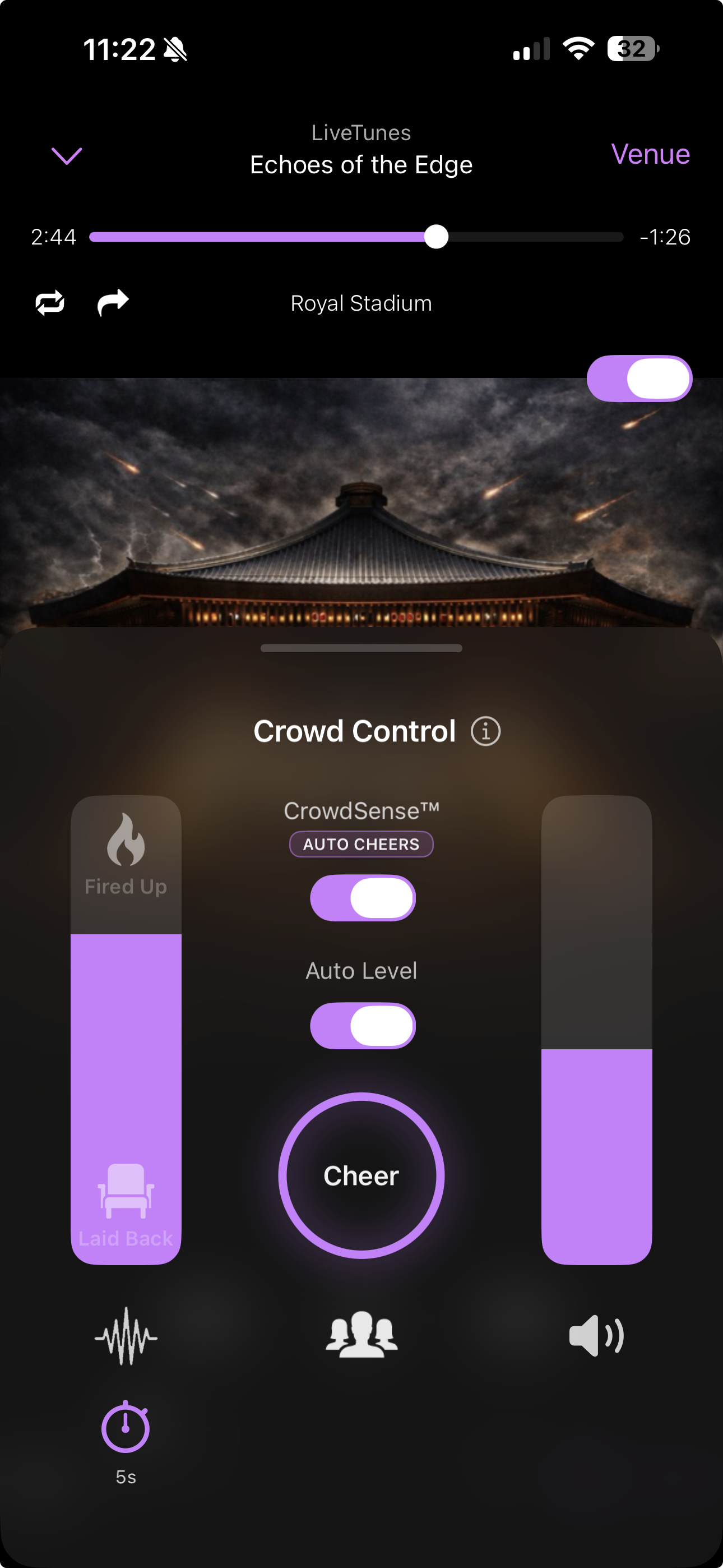
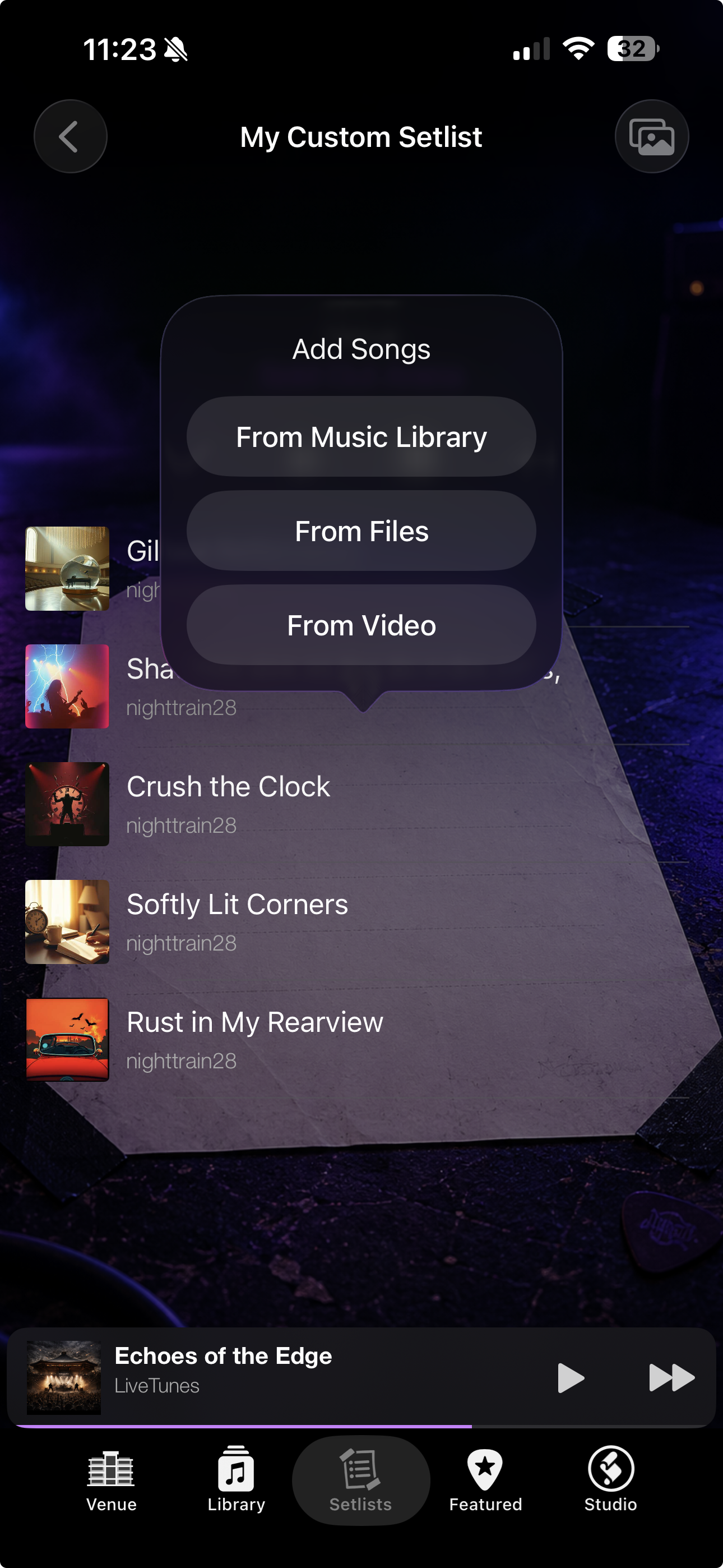
Figures 2–4. LiveTunes 4.0 interface: venue selection, live crowd controls, and custom setlists with music, file, and video import options.
03 — The AI Angle Built for a new generation of music makers
The 4.0 release adds full support for imported audio from the iOS Files app and cloud drives. This means users can now bring AI-generated tracks from tools like Suno and Udio into LiveTunes and hear them played live — complete with venue acoustics and reactive crowds. As AI music creation tools have exploded in popularity, LiveTunes offers something the major streaming and listening apps don't: a way to make those generated tracks feel like real performances.
Hill sees this as a natural extension of the app's original mission. "Whether you wrote the song, recorded it, or generated it with AI, the question is the same: what would it sound like live? LiveTunes answers that."
04 — For Musicians A studio for building your own live album
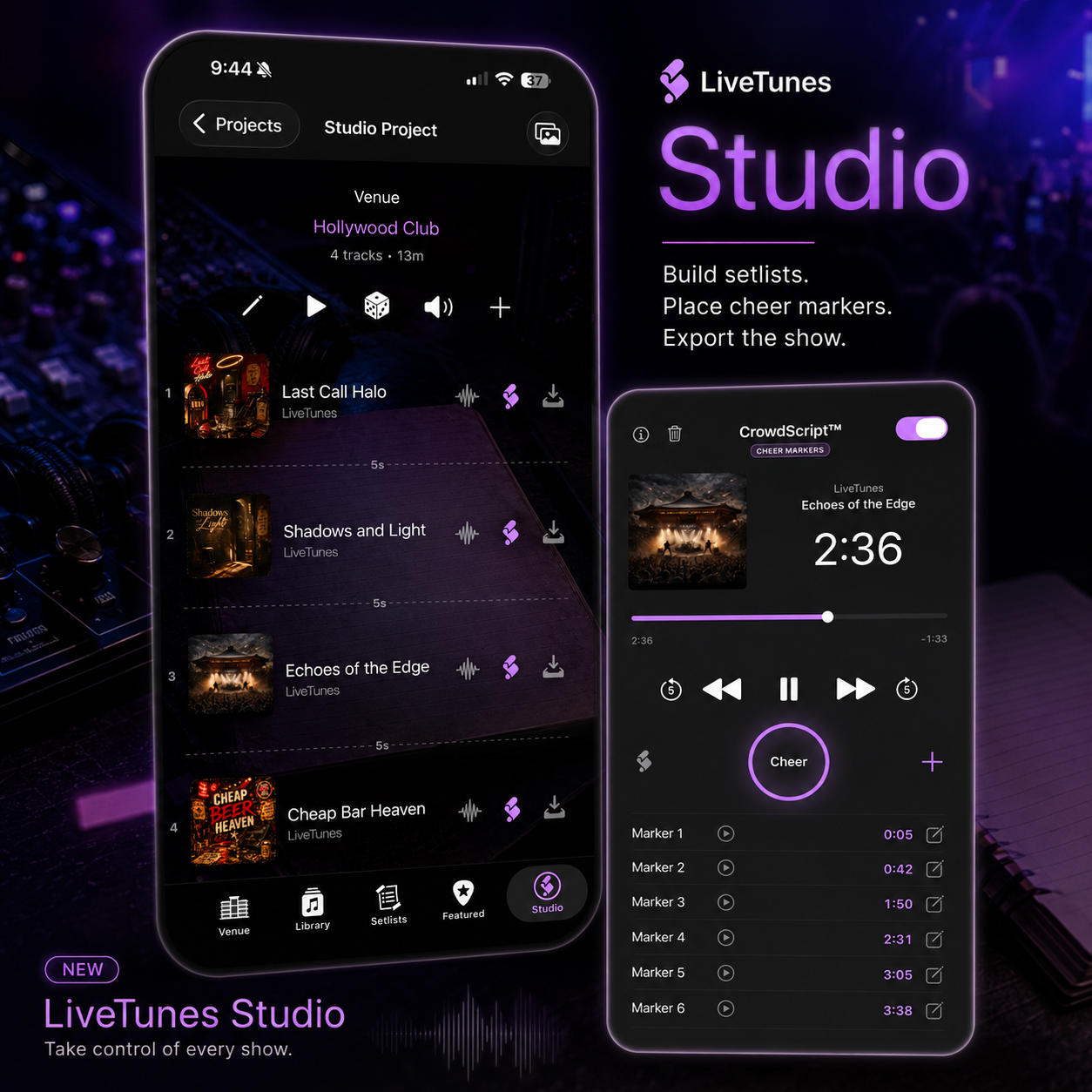
For musicians, songwriters, and home recording artists, LiveTunes 4.0 introduces LiveTunes Studio, a tool for building full live-show experiences. Users can arrange setlists from any combination of music library tracks and imported audio, mark cheer moments with CrowdScript™, and export complete live-album-style audio files. The result is a creative tool that doubles as a performance preview environment — letting independent artists hear how their demos would land in a small club or a packed stadium before they ever step on a real one.
05 — Availability Free on the App Store today
LiveTunes 4.0 is available now on the iOS App Store as a free download. An optional VIP ACCESS membership unlocks all venues including future releases, unlimited setlists, LiveTunes Studio, and the 3D Spatializer. Existing legacy users retain access to content they previously owned.